Pages

Friday, 14 December 2012

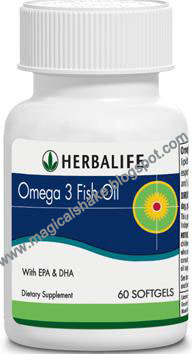
Heart Health with Omega-3

OMEGA 3 FISH OIL
  • Great supplement to improve your heart's health
  • Maintain healthy cholesterol [reduce LDL (=bad) cholesterol & raise good cholesterol]
  • Prevent fats & cholesterol from clogging at arteries
  • Reduce the risk of heart attack & stroke
  • Inclusive of EPA (act as Scavenger) & DHA (very greatz for brain & eyes)
  • Build cell membranes
  • a daily servings (2-3 softgels of omega-3 fish oil) is equivalent to 4 oz of salmon OR 1/2 cup of walnuts

Tuesday, 11 December 2012

Intestinal Health

ALOE CONCENTRATE
  • Relieve occasional indigestion
  • Improve nutrient obsorption
  • Strengthen immune systems
  • Anti-oxidants
  • Stabilise blood sugar level
  • Improve constipation & gastric issue
  • Killing of bacteria
  • Made with high quality aloe vera
  • Strongly recommended to take it as your VERY FIRST glass of drink every morning

Tuesday, 4 December 2012

Bad FAT alert

How much do you understand bout fat??? Most of the people thought that fats are not good. Then, YOU ARE WRONG!! Basically not all fats are harmful. But, always say NO! NO! to the following killing fats:-

SATURATED FATS
Fat that contains only saturated fatty acids. It contains more in animal products than in plant-based products. Some examples of animals products are red meat (eg: beef, lamb, pork), cheese, cream, ice cream, dairy, butter and eggs while coconut, palm kernel oil & chocolate are some examples of plant-based products. It tends to be solid under normal room temperature.

You are advised to get rid of it as much as you can as it contributes the most in elevating cholesterol level, especially the LDL cholesterol level, which is so-called the bad cholesterol and it is also one of the main risk factor of cardiovascular disease.
You are advised to take not more than 7% of saturated fats of your daily total calories.

TRANS FATS
Also called as Partially Hydrogenated Fats, as it is a process where the liquid vegetable oils are turn into solid fats. It is generally use to extend the lifespans of processed foods, especially fries food, marjerin, cookies, chips, cakes, muffins, donuts and pizza. It is extremely popular in Fast Food Restaurants. It is harmful to health and it contributes to major health problem such as heart disease and cancer. It will raise the LDL (bad) cholesterol levels while at the same time lowering HDL (good) cholesterol levels.

You are advised to take not more than 1% of trans fats of your daily total calories.


Examples:-
If your daily calories = 1200
you are advised not to consume more than 1% of trans fat daily.
how many gram of trans fat you can consume daily? = 1.33grams

1200kcal x 1% = 12kcal
12kcal / 9kcal = 1.33grams of trans fat

**1 gram of FAT = 9kcal**

Thursday, 29 November 2012

Know your Metabolic Rate

Metabolic Rate is the rate at which your body burns calories. Basically, our body burns calories through 3 different ways:-

1) Basal Metabolic Rate (BMR) is the amount of energy expended on a daily basis at rest, which is closely linked with Resting Metabolic Rate (RMR). BMR will show you the minimum calories your body need daily to keep yourself in a resting position and it also represents the minimum amount of energy which is required in order to keep your body functioning well (includes: having your heart beat, lungs breathing & body temperature normal). Please be reminded that our body still burning calories although we are in a non-active position, for example: sleeping or sitting.

2) Thermic Effect of Exercise (TEE) is the amount of energy expended due to activity perform in your daily living. (for example: work & exercise). The higher the TEE, the higher the calories your body required. The following is a list of activity factor based on your activity category.

Activity Factor   Category
1.2   Sedentary (Less Active)
1.4   Lightly Active
1.6   Moderately Active
1.7   Very Active
1.9   Extremely Active

3) Thermic Effect of Food (TEF) is the process of extracting energy and nutrients from food, including absorb, digest and process. Our body required more energy to digest the foods which are protein based and carbohydrates based compared to the foods which belongs to fat based. As such, it is essential to convert our body fat into muscle and consumption of protein is strongly recommended.


*********************************************************************************************************************************************
In order to estimate your daily energy requirements, you need to know your BMR, TEE & TEF.

In conclusion:-

TEE(inclusive of BMR) = BMR x Activity Factor

TEF = about 10% of TEE (inclusive of BMR)

DAILY ENERGY required (kcal/day) = TEE (inclusive of BMR) + TEF

*********************************************************************************************************************************************
For example:
Your BMR = 1200kcal & you are a less active person (involved no exercise and your daily activities won't consume lots of energy, for example watching TV & playing games)

Your daily estimate calories consumption required are:-
TEE (inclusive of BMR) = 1200kcal x 1.2 = 1440kcal
TEF = 10% x 1440kcal = 144kcal

OVERALL DAILY ENERGY required = TEE (inclusive of BMR) + TEF
                                                              = 1440kcal + 144kcal = 1584kcal/day


Monday, 26 November 2012

Keep your heart healthy

                NW FORMULA
  • Developed with Dr. Louis Ignarro, the Nobel Laureate in Medicine
  • Support our body's ability to produce Nitric Oxide (NO) by the combination of L-Arginine and L-Citrulline
  • Improved cardiovascular system
  • Expand vessels & increase the vessels' elasticity 
  • Enhances blood flow & circulation to support function of heart, brain and other organs
  • Keep vessels toned
  • Prevent blood clot blockage  
  • Relax arteries
  • Relieve muscle pain
  • Recover energy while we are sleeping & provide energy after wake up